
Rotary Union Manufacturer & Supplier in Mumbai, India
Looking for a rotary union for a rotating cylinder, drum, roll or drying machine — or a replacement for a union that keeps leaking?
Our available range covers the single flow rotary union, dual flow rotary union, steam application rotary union and thermic fluid rotary union, along with custom and application-specific designs manufactured from your sample or drawing.
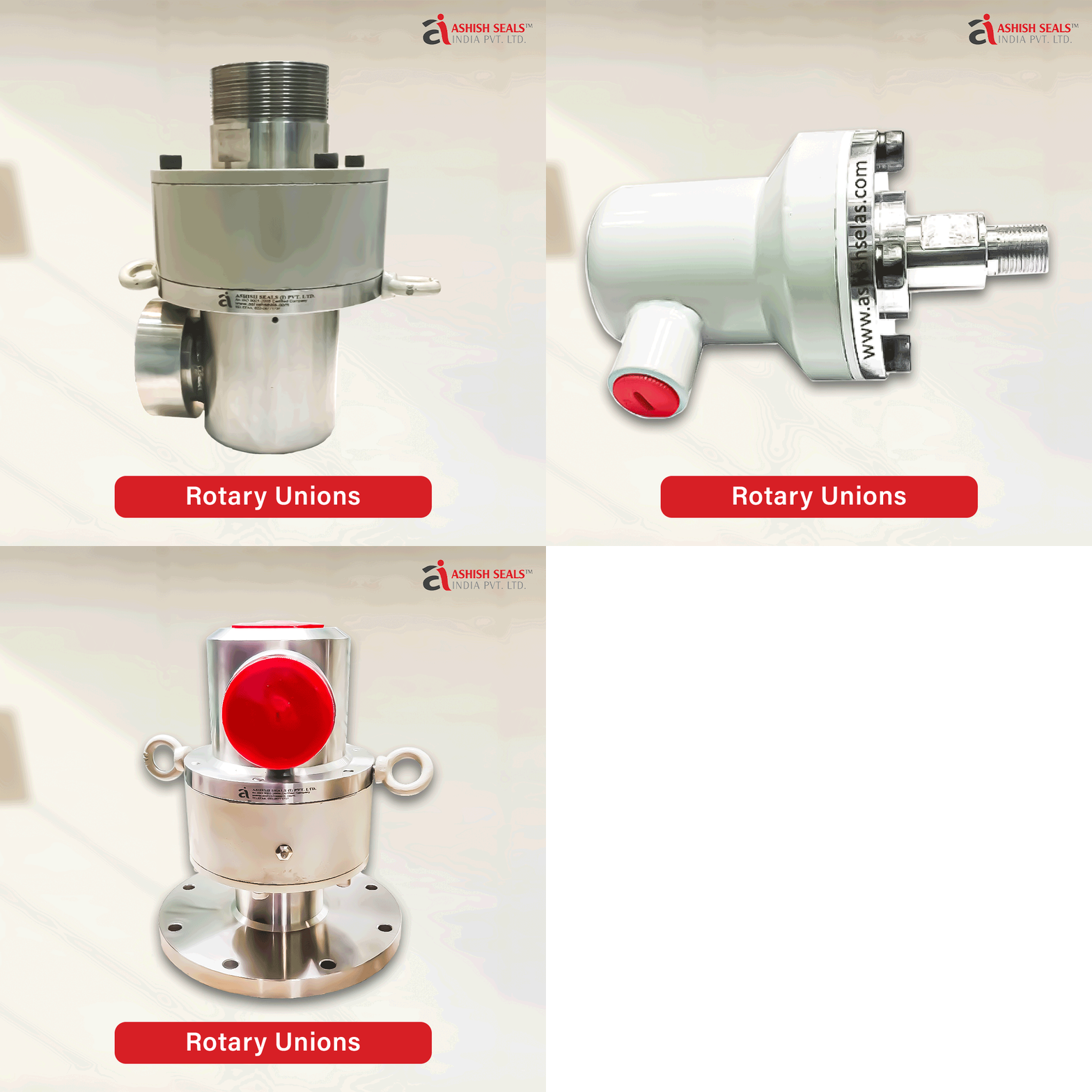
Rotary Union Types We Manufacture
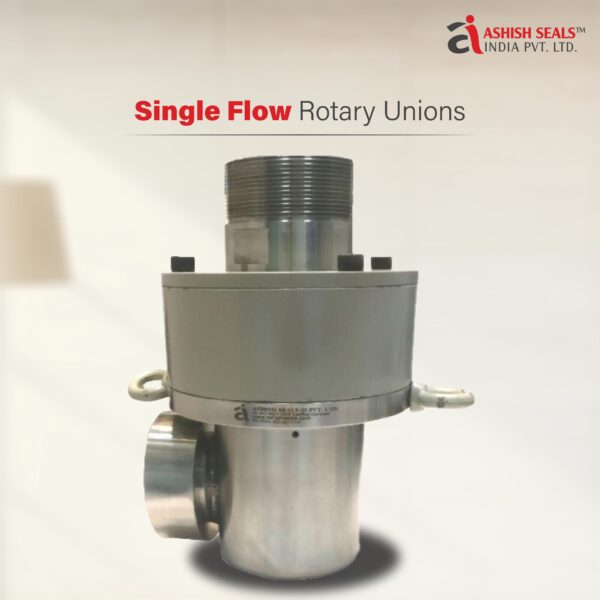
Single Flow Rotary Union
For duties where the medium moves in one direction through the union, with supply and return connected at opposite ends of the cylinder.
View Single Flow Rotary Union →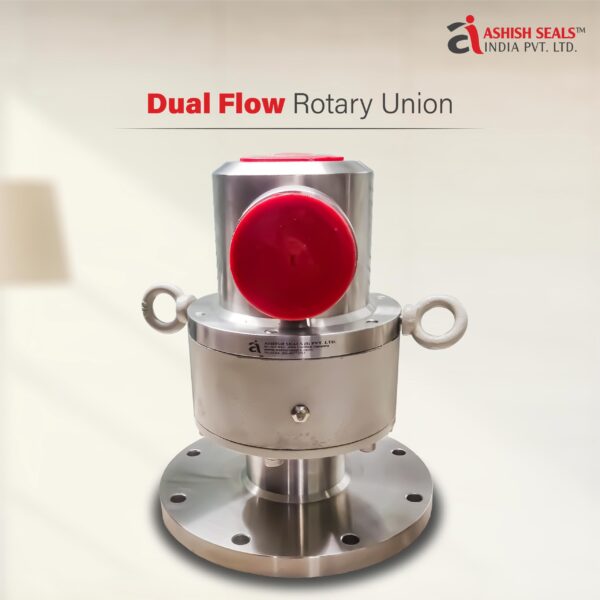
Dual Flow Rotary Union
Supply and return lines connect on the same side of the cylinder, with the return carried through a siphon pipe stationary within the union. /p> View Dual Flow Rotary Union →
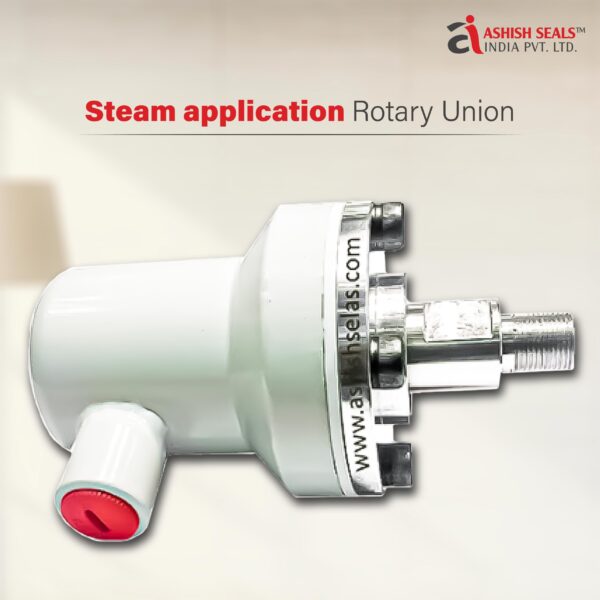
Steam Application Rotary Union
Built for steam-heated dryer cylinders, corrugating machines, paper and textile dryers and heated rolls. Seal faces, gaskets and clearances
View Steam Application Rotary Union →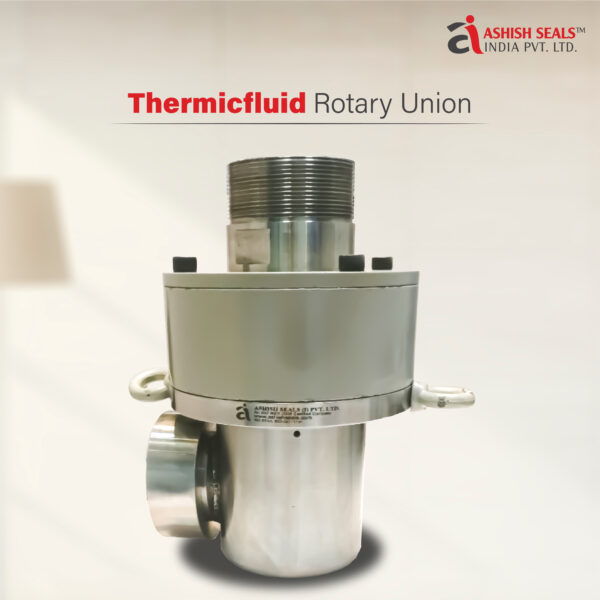
Thermic Fluid Rotary Union
For thermic-fluid-heated rolls, calenders, laminators and process drums where hot oil temperatures rule out general-duty construction.
View Thermic Fluid Rotary Union →What Is a Rotary Union and How Does It Work?
A rotary union is a rotating sealing device that links stationary supply and return piping to rotating equipment — a drum, cylinder, roll or shaft — so that steam, thermic fluid, water, oil or air can be transferred under pressure or vacuum while the equipment turns. Every rotary union combines:
A spring-loaded mechanical seal inside the union — usually a carbon face running against a hardened counter-face — keeps the connection leak-free as the two parts rotate against each other. Carbon bearings or ball bearings maintain alignment, and in dual flow designs a siphon pipe inside the union carries the return medium out through the same end that the supply enters.
That internal seal is the difference between a union that runs for years and one that drips within weeks. Excess speed, unsuitable face materials, misalignment, unsupported hoses or a worn journal will wear out the sealing faces quickly — which is why we review your operating conditions before we quote.
"Rotary union" and "rotary joint" describe the same device, and buyers use both terms. On this site, the rotary union range covers the single flow, dual flow, steam application and thermic fluid designs; the wider rotary joints range also covers water, hydraulic, pneumatic and coolant service.
Main Parts of a Rotary Union
Housing and end cap — the stationary body in cast iron, carbon steel, stainless steel or bronze, selected for the medium
Balanced mechanical seal — carbon graphite against hardened stainless steel, silicon carbide or tungsten carbide, with an improved seal-under-compression design for long life
Rotating nipple and springs — the rotating connection with spring loading that keeps the seal closed as the faces wear
Bearings, gaskets, flanges and siphon connections — plain cylindrical carbon bearings or ball bearings, plus the fittings that adapt the union to your cylinder
Construction varies by design — single flow, dual flow, self-supported, with or without bearing, with or without siphon, threaded or flanged. We build all of these, and no lubrication is required in service.
Find the Right Rotary Union for Your Equipment
Start with the machine and the medium you need to transfer. This table maps common requirements to the right rotary union — final selection always depends on your operating data.
| Your requirement | Rotary union type | What we need from you |
|---|---|---|
| Medium in one direction, supply and return at opposite ends | Single Flow Rotary Union | Journal size, medium, pressure, temperature, RPM |
| Supply and return at the same end of the cylinder | Dual Flow Rotary Union | Cylinder drawing, siphon details, medium, pressure, RPM |
| Steam to a dryer, corrugator or heated roll | Steam Application Rotary Union | Cylinder size, steam pressure, temperature, RPM, siphon type |
| Hot oil to a heated roll, calender or drum | Thermic Fluid Rotary Union | Fluid name, max temperature, pressure, RPM, connection size |
| Water, hydraulic, air or coolant service | Rotary Joints Range | Medium, pressure, temperature, RPM, connection size |
| Replace an imported or discontinued union | Custom & Replacement Unions | Sample, drawing or clear photographs with dimensions |
Two rotary unions with the same thread size can use different seal faces, bearings, siphon arrangements and internal clearances. Never select a union from the connection size alone — send us the operating details and we'll confirm the correct design before you order.
Single Flow vs Dual Flow, Carbon Bearing vs Ball Bearing: Choosing a Configuration
| Comparison | The difference | When it matters |
|---|---|---|
| Single flow vs dual flow | One direction of flow vs supply and return through the same union via a siphon | Dual flow is standard where both lines must connect at one end — typically steam dryers removing condensate |
| Carbon bearing vs ball bearing | Plain cylindrical carbon bearings vs rolling-element bearings | Bearing choice changes speed capability, service life and the maintenance pattern of the union |
| With vs without bearing | Internally guided vs bearing-supported construction | Self-supported unions tolerate journal misalignment better than externally rod-supported configurations |
| Stationary vs rotary siphon | Siphon pipe fixed vs rotating with the cylinder | Affects condensate removal at different machine speeds — critical on paper and textile dryers |
| Standard vs high-temperature construction | General-duty materials vs faces and gaskets rated for thermic fluid and high-pressure steam | Running a standard union on hot oil service is a common cause of early leakage |
| Threaded vs flanged connection | Screwed onto the journal vs bolted to a flange | Determined by your cylinder design; affects removal and maintenance time |
No configuration is universally better.
Send your conditions and we'll recommend the one that lasts on your machine — that recommendation costs you nothing.
Send Your Operating Conditions →How to Choose the Right Rotary Union
Our engineers run every enquiry through this checklist — the more of it you can send, the faster and more accurate your quotation:
Equipment & Dimensions
- Equipment — dryer cylinder, drum, chill roll, calender, corrugator, laminator or other rotating machine
- Journal or connection size — thread size and standard (BSP/NPT) or flange details, rotor bore
- Equipment condition — journal wear, runout, vibration and piping alignment (a perfect union fails on a bad journal)
- Existing union details — make, model, drawing, sample, nameplate or clear photographs
Operating Conditions
- Medium — steam, thermic fluid, water, oil or air, with any contamination or solids
- Pressure — normal, maximum, vacuum and fluctuations
- Temperature — operating and maximum, including start-up conditions
- Speed — cylinder or drum RPM, and whether the duty is continuous or intermittent
Requirement Details
- Flow arrangement — single flow or dual flow, and siphon details if condensate must be removed
- Bearing preference — carbon bearing, ball bearing, or leave it to our recommendation
- Quantity and required delivery
Industries and Equipment We Serve
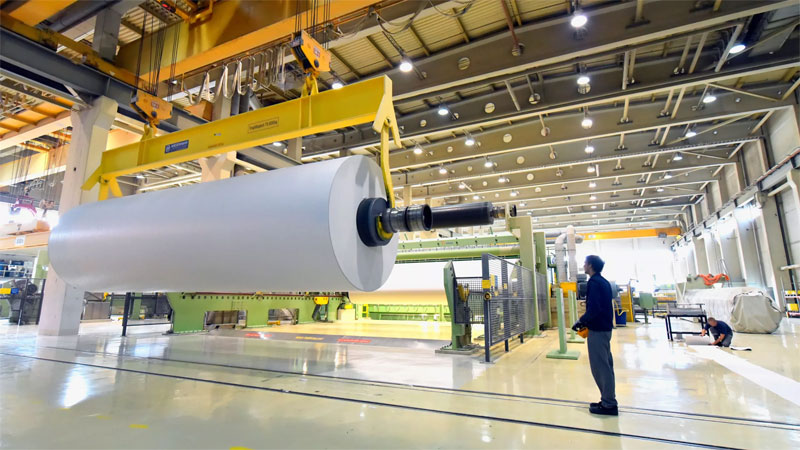
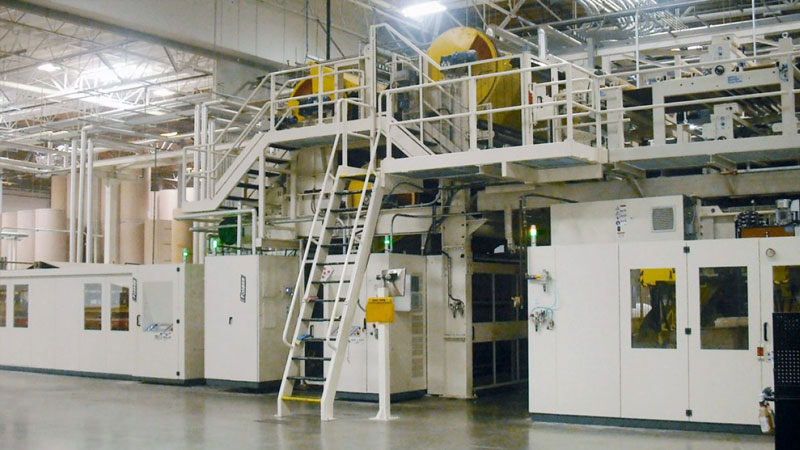
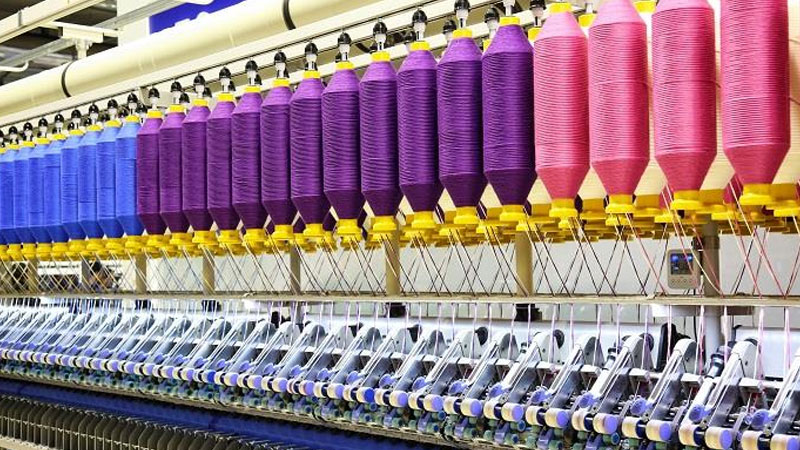
Our rotary unions run on paper and textile dryers, corrugating machines, rubber and plastic machinery, food processing equipment, heated rolls, drums and cooling cylinders across:

Rotary Union vs Swivel Joint, Flexible Hose and Stuffing Box
| Method | Construction | Typical use | Key difference |
|---|---|---|---|
| Rotary union / joint | Spring-loaded mechanical seal between stationary housing and rotating nipple | Continuous rotation — dryers, drums, rolls | Sealed fluid transfer at full rotating speed, no lubrication required |
| Swivel joint | Bearing-supported joint for slow or partial rotation | Loading arms, hose reels, articulating pipework | Handles movement, not continuous high-speed rotation |
| Flexible hose | Reinforced hose absorbing limited motion | Short travel and vibration, not rotation | Twists and fails if used on a rotating connection |
| Stuffing box / packing | Compressed packing around the rotating pipe | Older drums and dryers | Requires leakage and constant adjustment; high friction |
Replacing an old packed gland or improvised hose connection with a proper rotary union typically cuts leakage, downtime and journal wear on most rotating drums and rolls — ask us whether your machine is a candidate.
Why Buy Rotary Unions from Ashish Seals
20+ years of rotating-equipment sealing experience (since 2005), covering rotary unions and the mechanical seals inside them
ISO 9001:2015 certified, manufactured with quality-tested components and tested in-house in Mumbai
Engineering-led selection — we review your medium, pressure, temperature and speed before quoting, free of charge
Custom and replacement expertise for imported and discontinued rotary unions from samples, drawings and photographs
Repair and failure analysis — we solve repeat leakage problems, not just resupply unions
Pan-India supply and export to international buyers
Frequently Asked Questions
What is a rotary union?
A rotating sealing device that links stationary piping to rotating equipment — a drum, cylinder, roll or shaft — so that steam, thermic fluid, water, oil or air can be transferred under pressure or vacuum while the equipment turns.
Is a rotary union the same as a rotary joint?
Yes — both terms describe the same device and buyers use them interchangeably. "Rotary union" tends to be used for hydraulic, pneumatic and multi-passage designs, "rotary joint" for steam, water and hot oil service.
How does a rotary union work?
A stationary housing locks onto your piping while a rotating nipple turns with the machine journal. A spring-loaded mechanical seal inside keeps the connection leak-free during rotation, with carbon or ball bearings holding the two parts in alignment.
What is the difference between single flow and dual flow rotary unions?
In a single flow rotary union the medium travels in one direction, with supply and return at opposite ends of the cylinder. In a dual flow rotary union, supply and return connect at the same end, with the return carried through a siphon pipe inside the union.
When do I need a siphon?
Whenever condensate must be drawn out of a steam-heated drum or cylinder. A dual flow union with a stationary or rotary siphon, matched to the machine speed, removes condensate continuously through the same end the steam enters.
Which rotary union suits a paper dryer / corrugator / heated calender?
As a starting point: a steam application rotary union with a siphon for dryers and corrugators, and a thermic fluid rotary union for hot-oil-heated calenders and rolls. The exact design depends on your pressure, temperature, RPM and journal details.
Should I choose carbon bearings or ball bearings?
Both are available on our single and dual flow unions. The right choice depends on your speed, duty cycle and maintenance practice — tell us your conditions and we'll recommend one.
What pressures, temperatures and speeds can your rotary unions handle?
Ratings depend on the design, seal faces, bearings and construction materials, so there is no single figure. Send your operating conditions and we will state the rating of the union we recommend for your duty.
Do rotary unions need lubrication?
Our designs require no external lubrication in service — the internal seal arrangement handles it — which keeps maintenance to a minimum.
Which materials are used in your rotary unions?
Housings in cast iron, carbon steel, stainless steel or bronze; seal faces in carbon graphite, hardened stainless steel, silicon carbide or tungsten carbide; gaskets selected for the medium and temperature.
Can you make a rotary union from a sample or drawing?
Yes. We reverse-measure samples and manufacture from drawings after a technical review of dimensions, materials and operating conditions.
Can you replace imported or discontinued rotary unions?
Yes — this is one of our core services. Send the original union, drawing, machine details or clear photographs with dimensions.
What is the price of a rotary union in India?
It varies with type, size, medium, pressure and temperature rating, bearing choice, siphon arrangement and quantity. Two unions with the same thread size can differ significantly. Send your details for a specific quotation.
What information do you need for a quotation?
Machine type, journal or connection size, medium, pressure, temperature, RPM, flow arrangement (single or dual flow, siphon details), a drawing or sample if available, and quantity.
Why does my rotary union keep leaking?
Common causes: worn seal faces, excess speed for the design, misalignment between union and journal, unsupported hose or piping loads, water hammer, wrong materials for the medium, or a worn journal. Send the failed union for analysis — a new identical union will fail the same way if the cause isn't fixed.
Can a leaking rotary union be repaired?
Often, yes — after inspection of the seal faces, bearings, springs, nipple and housing. We advise repair, refurbishment or replacement case by case.
What is the HSN / HS code for rotary unions?
Rotary unions and joints are commonly classified under HS 8487.90 (HSN 84879000 in India) as machinery parts. Confirm current classification and GST treatment before invoicing.
Do you supply outside Mumbai?
Yes — we manufacture in Mumbai and supply across India and to export markets including Africa, the Gulf, Australia and New Zealand.
Request a Rotary Union Recommendation or Quotation
Don't select a rotary union from the thread size, appearance or an old part number. Send us your machine type, journal or connection size, medium, pressure, temperature, RPM, flow arrangement, existing union details and quantity — with a drawing, sample or photographs if you have them.
Our engineers will confirm whether you need a single flow rotary union, dual flow rotary union with siphon, steam application rotary union, thermic fluid rotary union or a custom replacement — and quote the exact design for your application.