
Thermosyphon Pot System Manufacturer & Supplier in Mumbai, India
Running a double mechanical seal on a pump, agitator or reactor — and need a thermosyphon pot system to keep the barrier fluid cool, clean and pressurised?
Our range covers the standard thermosyphon pot system, thermosyphon pot systems for pump and agitator mechanical seals, thermosyphon pot systems for reactors, and SS304/SS316 vessels with cooling coil options in SS316, SS304 or copper — plus custom capacities built to your seal plan and drawing.
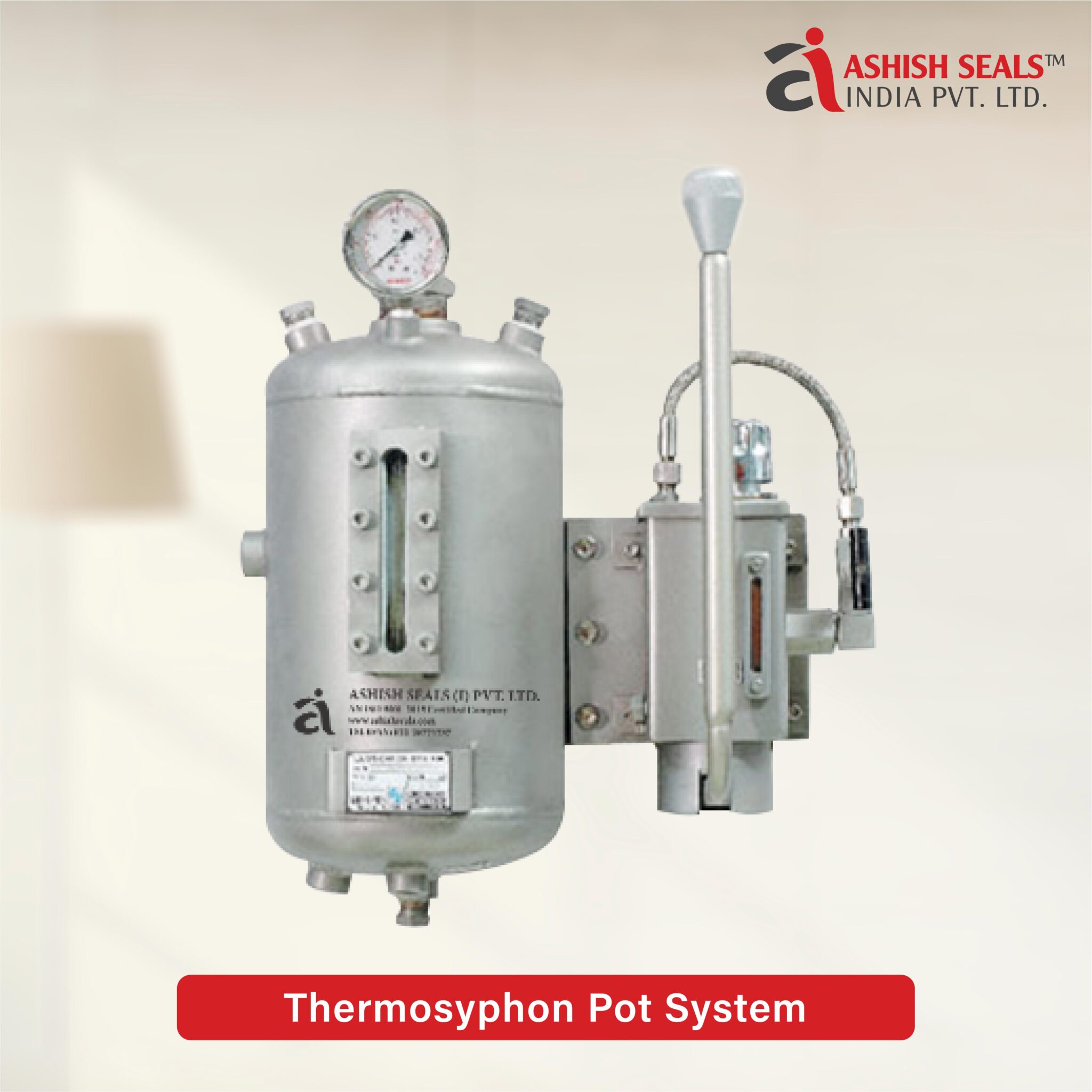
Thermosyphon Pot System Types We Manufacture
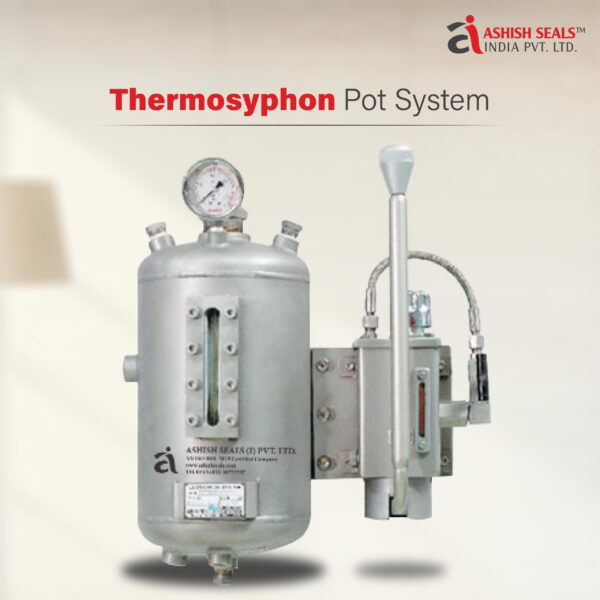
Thermosyphon Pot System
Our standard seal support vessel for double mechanical seals in tandem or back-to-back arrangement. Circulates barrier fluid by the thermosyphon principle, cools it through the vessel walls and internal cooling coil, and holds a counter pressure above system pressure so any leakage is pressurised back into the process — keeping the installation leak-proof.
View Thermosyphon Pot System →Every thermosyphon pot works together with a double mechanical seal. If you're still selecting the seal itself, see our mechanical seals range — we supply the seal and its support system as a matched pair.
What Is a Thermosyphon Pot System and How Does It Work?
A thermosyphon pot system (also called a thermosyphon vessel or seal pot) is a storage and pressurising unit for the barrier or buffer fluid of a double mechanical seal. Its job is twofold:
The circulation happens without a pump. Cooler, denser fluid leaves the vessel through the bottom line and enters the seal; the seal faces, rubbing at high speed, heat the fluid, and the warmer, lighter fluid rises back to the vessel through the top line. Inside the vessel, contact with the tank walls and the internal cooling coil brings the temperature back down — and the cycle repeats. This natural circulation is the thermosyphon principle; where duty demands it, the same vessel can also run on forced circulation.
The result at the seal is a stable fluid film between the faces that prevents dry running — which is exactly what a double seal needs to reach its designed life. An undersized pot, a fouled coil, the wrong barrier fluid or a lost counter pressure will overheat the faces and fail the seal, which is why we ask about your seal arrangement and operating conditions before quoting.
Buyers also call this equipment a seal pot, seal support system or barrier fluid system. Pressurised and unpressurised arrangements correspond to the piping plans commonly specified for dual seals (such as API-type Plan 52 and Plan 53A layouts) — tell us which plan your seal drawing calls for and we'll configure the pot to suit.
Main Parts of a Thermosyphon Pot System
Vessel shell and dished ends — fabricated in SS304 or SS316, sized for the barrier fluid volume your seal duty needs
Internal cooling coil — in SS316, SS304 or copper, carrying cooling water to pull heat out of the returning barrier fluid
Seal supply and return connections — bottom outlet to the seal, top return from the seal, plus pressurisation (nitrogen/plant air), vent, drain and fill connections
Instrumentation and mounting — level gauge or sight glass, pressure gauge, mounting legs or brackets, with switches and valves added to suit your plant standard
Operating parameters vary with the application and tank volume — capacity, pressure rating, coil area and connection sizes are selected per duty. We build standard and custom configurations.
Find the Right Thermosyphon Pot System for Your Seal
Start with the equipment and the seal arrangement it carries. This table maps common requirements to the right configuration — final selection always depends on your operating data.
| Your requirement | System configuration | What we need from you |
|---|---|---|
| Support a double seal on a process pump | Thermosyphon Pot for Mechanical Seals | Seal make/size, arrangement, process pressure, temperature, barrier fluid |
| Support a double seal on a reactor or agitator drive | Thermosyphon Pot for Reactors | Reactor drawing, seal details, vessel pressure/vacuum, batch temperatures |
| Hazardous or volatile process — zero atmospheric leakage | Pressurised pot (barrier fluid above system pressure) | Process fluid, system pressure, required barrier pressure, seal plan |
| Monitor leakage on a tandem seal | Unpressurised buffer pot with level monitoring | Seal arrangement, buffer fluid, level/pressure instrumentation needs |
| High seal heat load or hot process | Pot with enlarged cooling coil / forced circulation | Process temperature, seal speed and size, cooling water details |
| Replace an imported or discontinued seal pot | Custom & Replacement Pots | Sample, drawing or clear photographs with dimensions and nameplate |
Two seal pots that look identical can differ in capacity, pressure rating, coil area and connection layout — and an undersized or wrongly pressurised pot will fail a perfectly good seal. Never select a pot from appearance or capacity alone — send us the seal and operating details and we'll confirm the correct configuration before you order.
Pressurised or Unpressurised, Coil or No Coil: Choosing a Configuration
| Comparison | The difference | When it matters |
|---|---|---|
| Pressurised vs unpressurised | Barrier fluid held above system pressure vs buffer fluid at low pressure | Pressurised (Plan 53A-type) for hazardous fluids where nothing may reach atmosphere; unpressurised (Plan 52-type) for tandem seals with leakage monitoring |
| Back-to-back vs tandem seal arrangement | Two seals facing away from each other vs stacked in series | Decides whether the pot runs barrier fluid (pressurised) or buffer fluid (unpressurised) |
| Thermosyphon vs forced circulation | Natural convection through top and bottom lines vs pumped circulation | Natural circulation suits most duties; high heat loads or long piping runs need forced circulation |
| With vs without cooling coil | Internal coil carrying cooling water vs cooling through vessel walls alone | Hot processes and high seal speeds need the coil; light duties may not |
| SS304 vs SS316 vessel, SS or copper coil | Material grades of shell and coil | Chosen for the barrier fluid, cooling water quality and plant standard |
| Standard vs instrumented | Level gauge and pressure gauge vs added switches, transmitters and valves | Instrumentation turns the pot into an early-warning system for seal leakage |
No configuration is universally better.
Send your seal arrangement and conditions and we'll recommend the pot that keeps your seal alive — that recommendation costs you nothing.
Send Your Seal Details →How to Choose the Right Thermosyphon Pot System
Our engineers run every enquiry through this checklist — the more of it you can send, the faster and more accurate your quotation:
Seal & Equipment Details
- Equipment — pump, agitator, mixer or reactor carrying the double seal
- Seal arrangement — tandem or back-to-back, seal make, size and drawing if available
- Seal piping plan — the plan number on your seal drawing, if one is specified
- Existing pot details — make, capacity, drawing, sample, nameplate or clear photographs
Operating Conditions
- Process fluid and system pressure — what the seal holds back, and the pressure the barrier fluid must exceed
- Temperature — process and ambient, including batch heating or CIP cycles
- Barrier or buffer fluid — the fluid you plan to run, or ask us to recommend one
- Cooling water — availability, temperature and quality at the installation point
Requirement Details
- Materials — SS304 or SS316 vessel; SS316, SS304 or copper coil; plant standards
- Instrumentation and mounting — gauges, switches, legs or brackets, space constraints
- Quantity and required delivery
Industries and Equipment We Serve
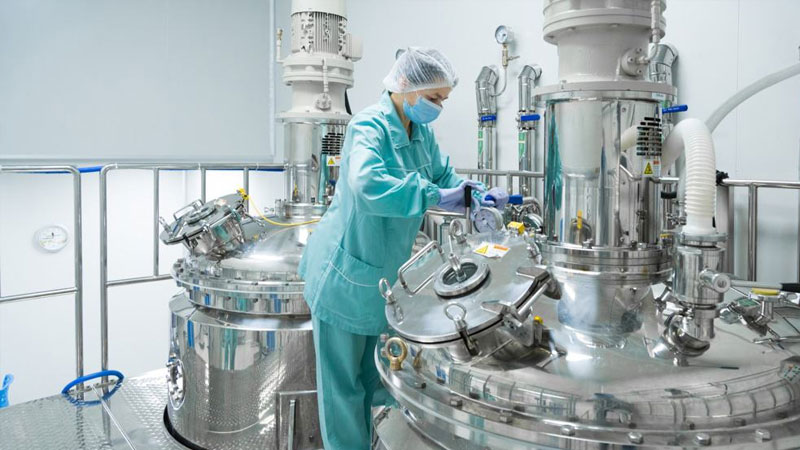
Our thermosyphon pot systems support double mechanical seals on pumps, agitators, mixers and reactor drives across:

Thermosyphon Pot vs Plain Seal Pot, Forced Circulation and Direct Flush
| Method | Construction | Typical use | Key difference |
|---|---|---|---|
| Thermosyphon pot system | Vessel with cooling coil, natural circulation through top and bottom lines | Double seals in tandem or back-to-back arrangement | Cools, lubricates and pressurises the barrier fluid with no pump |
| Plain seal pot (no coil) | Simple reservoir without internal cooling | Light duties with low seal heat load | No active cooling — barrier fluid temperature rises with duty |
| Forced circulation system | Pumped barrier fluid loop with cooler | High heat loads, long piping runs, multiple seals | Positive circulation but adds a pump, power and maintenance |
| Direct process flush | Process fluid routed across the seal faces | Clean, cool, non-hazardous process fluids on single seals | No barrier fluid — unsuitable for hazardous, hot or dirty media |
Running a double seal without a proper support system — or on an undersized, uncooled pot — is one of the most common causes of premature double-seal failure. Ask us whether your seal installation is a candidate for an upgrade.
Why Buy Thermosyphon Pot Systems from Ashish Seals
20+ years of mechanical seal and seal-support experience (since 2005) — we make the seals these pots protect
ISO 9001:2015 certified, fabricated and pressure-tested in-house in Mumbai
Engineering-led selection — we review your seal arrangement, pressures and temperatures before quoting, free of charge
Seal + system as a matched pair — one supplier responsible for the double seal and its support pot
Custom and replacement expertise for imported and discontinued seal pots from samples, drawings and photographs
Pan-India supply and export to international buyers
Frequently Asked Questions
What is a thermosyphon pot system?
A storage and pressurising vessel for the barrier or buffer fluid of a double mechanical seal. It circulates the fluid to the seal faces for lubrication and cooling, and holds a counter pressure so the installation stays leak-proof.
What is the thermosyphon pot working principle?
Cool, dense fluid leaves the vessel through the bottom line into the seal; the seal faces heat it; the warmer, lighter fluid rises back through the top line into the vessel, where the tank walls and cooling coil bring the temperature down. The density difference drives the circulation — no pump needed.
When do I need a thermosyphon pot system?
Whenever you run a double mechanical seal in tandem or back-to-back arrangement. The pot supplies the clean barrier or buffer fluid the seal needs to lubricate its faces, carry away heat and, in pressurised systems, keep process fluid from reaching atmosphere.
What is the difference between barrier fluid and buffer fluid?
Barrier fluid is held above process pressure in a pressurised (back-to-back) system, so any leakage flows into the process. Buffer fluid runs below process pressure in an unpressurised (tandem) system and is monitored to detect inner-seal leakage.
Should the pot be pressurised or unpressurised?
Pressurised for hazardous, toxic or volatile fluids where nothing may escape to atmosphere; unpressurised for tandem seals where the pot mainly cools the buffer fluid and monitors leakage. Your seal arrangement and process decide it — send us the details.
What does the cooling coil do?
The coil inside the shell carries cooling water that pulls heat out of the barrier fluid returning from the seal, so the fluid re-enters the seal cool enough to protect the faces. Coils are supplied in SS316, SS304 or copper.
How is the pot connected to the seal?
The bottom outlet feeds cool fluid to the seal and the top connection returns hot fluid to the vessel, with the pot mounted above the seal so natural circulation works. Additional connections handle pressurisation, fill, vent and drain.
Do you follow API-type seal piping plans?
Yes — pressurised and unpressurised thermosyphon arrangements correspond to the dual-seal piping plans commonly specified on seal drawings (such as Plan 52 and Plan 53A layouts). Tell us which plan your drawing calls for and we'll configure the pot to suit.
What size thermosyphon pot do I need?
Capacity depends on the seal size and speed, the heat load and the piping run — operating parameters vary with the application and tank volume. Send your seal and process details and we'll size it for you.
Which materials are used in your thermosyphon pots?
Vessels in SS304 or SS316 with cooling coils in SS316, SS304 or copper, plus gauges, valves and fittings to your plant standard. Other materials can be discussed for special duties.
Which barrier fluid should I use?
It must be compatible with your process fluid and seal elastomers, stable at your temperatures and clean. Common choices include water-glycol mixes and light mineral or synthetic oils — tell us your process and we'll recommend one.
Can you supply the pot together with the double mechanical seal?
Yes — we manufacture both, and supplying them as a matched pair means one supplier is responsible for the complete sealing system.
Can you make a pot from a sample or drawing, or replace an imported one?
Yes. We reverse-measure samples and manufacture from drawings after a technical review — including replacements for imported and discontinued seal pots.
What is the price of a thermosyphon pot system in India?
It varies with capacity, pressure rating, materials, coil area, instrumentation and quantity. Two pots of the same size can differ significantly in specification. Send your details for a specific quotation.
What information do you need for a quotation?
Equipment and seal details (arrangement, make, size), process fluid and pressure, temperatures, barrier or buffer fluid, cooling water availability, material requirements, instrumentation needs and quantity.
Why does my double seal keep failing even with a seal pot?
Common causes: an undersized pot, a fouled or missing cooling coil, lost counter pressure, wrong barrier fluid, blocked circulation lines or the pot mounted too low. Send your installation details — often the pot, not the seal, is the problem.
How do I maintain a thermosyphon pot system?
Keep the barrier fluid clean and topped up, watch the level and pressure gauges, verify cooling water flow and flush the coil periodically. A falling level or rising pressure is an early warning of seal leakage worth investigating.
Do you supply outside Mumbai?
Yes — we manufacture in Mumbai and supply across India and to export markets.
Request a Thermosyphon Pot System Recommendation or Quotation
Don't select a seal pot from capacity, appearance or an old part number. Send us your equipment and seal details, arrangement (tandem or back-to-back), process fluid and pressure, temperatures, barrier or buffer fluid, cooling water availability, material and instrumentation requirements and quantity — with a drawing, sample or photographs if you have them.
Our engineers will confirm whether you need a pressurised or unpressurised system, size the vessel and cooling coil for your duty, and quote the exact configuration — with the matching double mechanical seal if you need that too.