
Cartridge Mechanical Seal Manufacturer in Mumbai, India
Tired of installation errors eating into seal life before the pump has even run its first shift?
Ashish Seals India manufactures cartridge mechanical seals in single, double and dual back-to-back configurations — self-contained units with the faces, sleeve and gland already set at the factory, for shaft diameters from [25 mm to 100 mm], up to [25 bar] and [–20°C to 200°C]. We've been building mechanical seals in Mumbai since 2005.
A cartridge seal removes the single biggest cause of day-one leakage: installation error. Nothing to measure, nothing to set on site — the unit goes onto the shaft as one piece, at the correct spring compression every time. That's why cartridge construction has become the standard upgrade wherever a plant is tired of chasing seal failures that turn out to be fitting mistakes rather than seal defects.
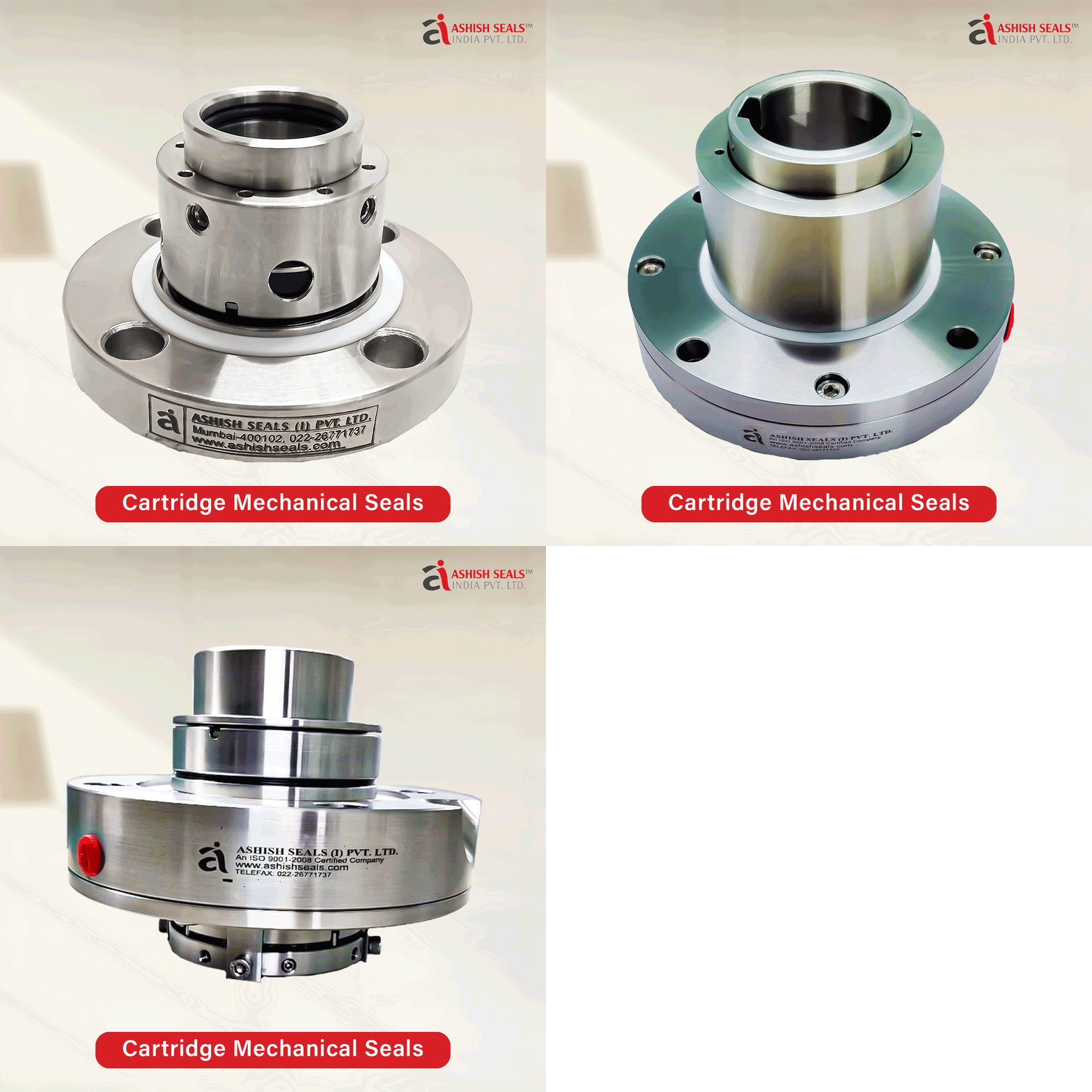
Types of Cartridge Mechanical Seals
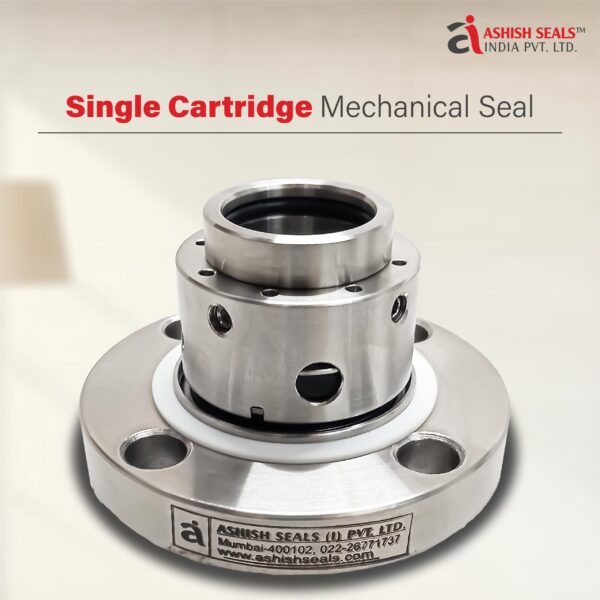
Single Cartridge Mechanical Seals
A heavy-duty, non-clogging cartridge design — balanced, inside mounted, independent of direction of rotation. Fits ANSI standard and big-bore pumps, available in inch and metric sizes, and economical to repair. The standard choice for process pumps handling slurry, pulp & paper stock, and syrup where a simple, robust single seal is enough.
View Single Cartridge Seal →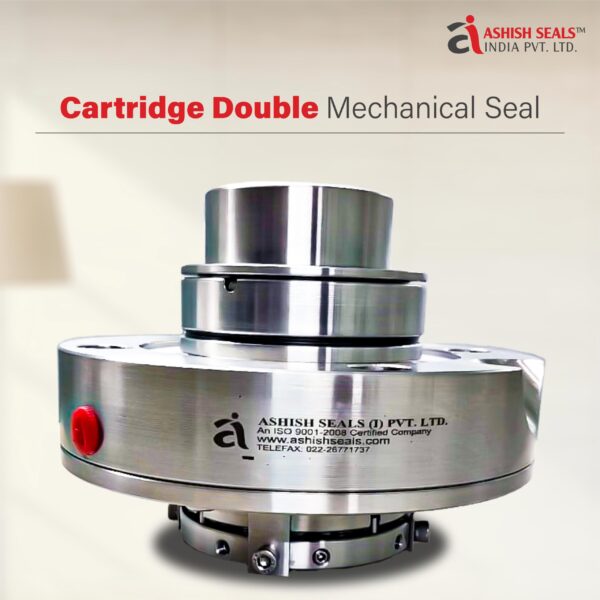
Double Cartridge Mechanical Seals
Two seals arranged in series inside one self-contained chamber, running on a pressure barrier fluid or a non-pressurised buffer liquid — four seal faces pre-assembled at the factory. The inboard primary seal keeps the product contained in the pump housing; the outboard seal backs it up. Used on process pumps, slurry pumps and boiler feed pumps handling viscous media, in paper, petrochemical and refinery plants.
View Double Cartridge Seal →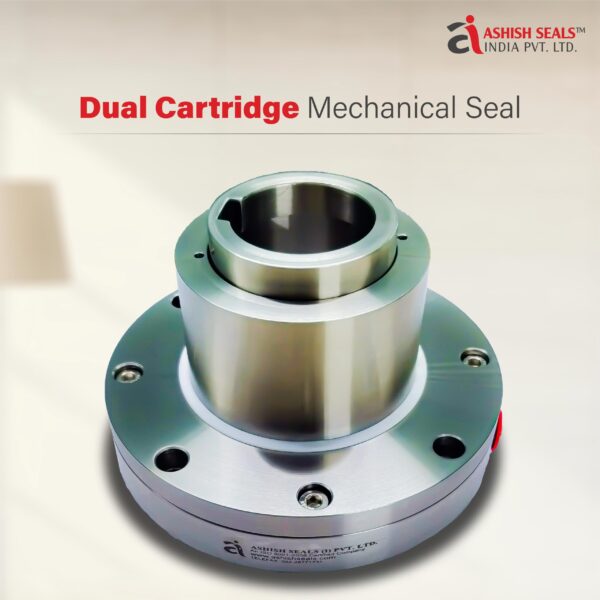
Dual Cartridge Back-to-Back Mechanical Seals
The pressurised-barrier upgrade to a double cartridge seal — the two seal sets are mounted facing away from each other, with a barrier fluid held above process pressure between them, so any leakage is pushed back into the process rather than out to atmosphere. Pre-assembled with four seal faces for the same fast, error-free installation. Chosen wherever media leaking to atmosphere simply isn't acceptable.
View Dual Back-to-Back Seal →Every double or dual back-to-back cartridge seal works together with a barrier-fluid support system. See our thermosyphon pot systems — we supply the seal and its support system as a matched pair.
Why Choose a Cartridge Seal Over a Component Seal?
A component seal is fitted and set on the shaft by the technician on site — every setting is a chance for error. A cartridge seal removes that step entirely:
That's why cartridge construction is the standard recommendation wherever downtime is expensive, technicians rotate between shifts, or a plant has a history of "new seal, same leak" complaints that turn out to be installation-related rather than a seal defect.
Single, Double or Dual Back-to-Back: Choosing the Right Cartridge Seal
Start with your leakage tolerance and process fluid. This table maps common requirements to the right cartridge configuration — final selection always depends on your actual operating data.
| Comparison | Single cartridge | Double cartridge (tandem) | Dual back-to-back |
|---|---|---|---|
| Construction | One seal, one set of faces | Two seals in series, unpressurised buffer fluid | Two seals facing away from each other, pressurised barrier fluid |
| Leakage control | Standard containment for non-hazardous media | Buffer fluid lets you monitor inner-seal leakage | Barrier pressure pushes any leakage back into the process — none reaches atmosphere |
| Best suited for | Process pumps, slurry pumps, pulp & paper stock, syrup | Process, slurry and boiler feed pumps with viscous media | Toxic, volatile or high-value media where atmospheric leakage is unacceptable |
| Typical industries | General process, pulp & paper | Paper, petrochemical, petroleum refining | Chemical, petrochemical, pharma — hazardous duty |
Two cartridge seals that look identical can differ in balance, spring configuration and face material. Never select by shaft diameter alone — send us your pump details and process conditions and we'll confirm the right build before you order.
What We Need to Quote Your Cartridge Seal
Cartridge seals are matched to the pump and duty, not sold as a single universal part. Send as much of this as you can — photographs of the existing installation fill most of the gaps.
| Parameter | What to Send | Why It Matters |
|---|---|---|
| Equipment type | Process pump, slurry pump, boiler feed pump, or other rotating equipment | Sets duty class and expected loading |
| Shaft / sleeve diameter | Actual measured diameter at the seal chamber | Sets cartridge bore and internal dimensions |
| Stuffing box / seal chamber dimensions | Bore, depth, gland bolt circle | Confirms the cartridge fits without machining |
| Pressure | Normal and maximum operating pressure | Sets balance and barrier requirements |
| Temperature | Operating and maximum temperature | Drives face, elastomer and metal choice |
| Media | Chemical name, concentration, pH | Material compatibility |
| Solids content | %, particle size, abrasiveness | Confirms slurry-duty face materials and clearances |
| Leakage risk | Non-hazardous, toxic, volatile, flammable | Single vs double vs back-to-back decision |
| Existing seal | Model, drawing, photos, sample, failure history | Enables a compatible replacement |
| Order details | Quantity, delivery location, required date | Production and dispatch planning |
Typical builds cover shaft diameters from [25 mm to 100 mm], pressures up to [25 bar], and temperatures from [–20°C to 200°C], depending on the configuration and material combination. Final limits are stated on the approved design.
Industries We Serve
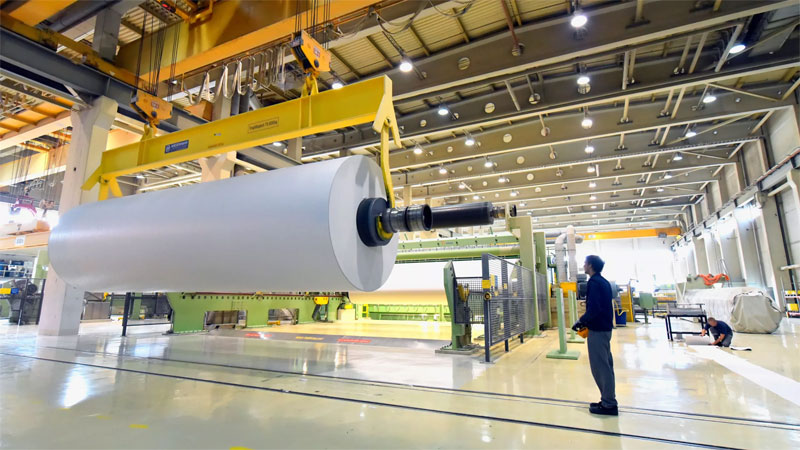
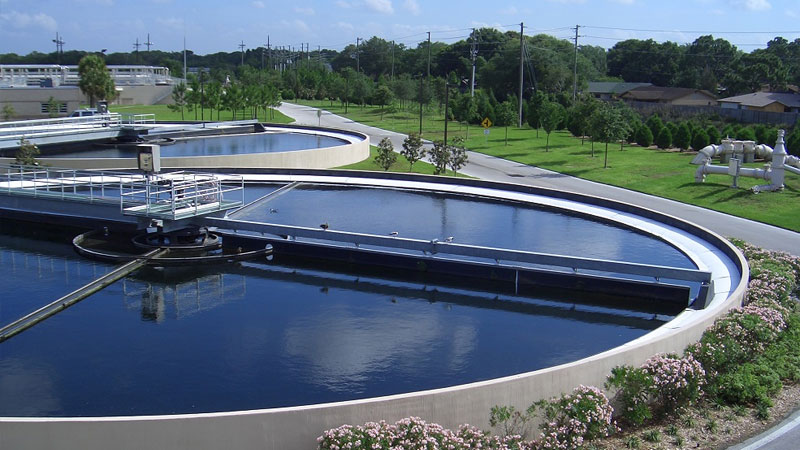
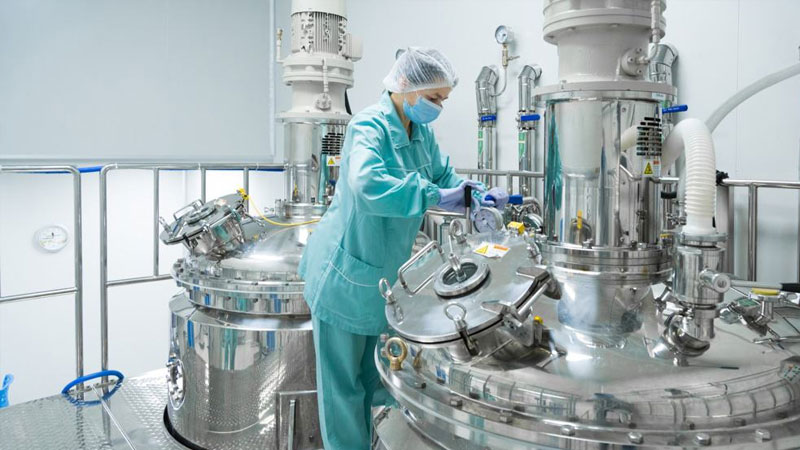
Cartridge mechanical seals go wherever fast, error-free installation and reliable containment matter most:

Why Buy from Ashish Seals India?
We've manufactured industrial sealing solutions in Mumbai since 2005, with the entire process under one roof:
Application-based seal selection by our own engineering team
Custom design and development, including reverse engineering from a worn sample
CNC and VMC machining, seal-face lapping [checked to light-band flatness]
Component inspection, assembly and testing before every dispatch
Matched thermosyphon and barrier-fluid systems supplied with double and back-to-back cartridges
[Repair and reconditioning of existing seals]
What that means for you as a buyer: one accountable manufacturer, a cartridge engineered for your pump and process rather than a generic bore-fit part, and someone who picks up the phone when there's a question after delivery.
Frequently Asked Questions
What is a cartridge mechanical seal?
A self-contained sealing unit — faces, sleeve and gland pre-assembled and pre-set at the factory — that fits onto the shaft as one piece, without the technician measuring or setting spring compression on site.
What's the difference between a cartridge seal and a component seal?
A component seal is fitted and set on the shaft manually, which leaves room for installation error. A cartridge seal arrives pre-set, so it goes on correctly every time and comes off as one piece during maintenance.
Should I choose single, double or dual back-to-back?
Single for non-hazardous media and standard containment. Double (tandem) where you want to monitor inner-seal leakage through a buffer fluid. Dual back-to-back where leakage to atmosphere is unacceptable and the media needs a pressurised barrier.
What is the difference between double cartridge and dual back-to-back cartridge seals?
Both use two seal sets in one chamber. Double (tandem) seals are arranged in the same direction with an unpressurised buffer fluid between them. Dual back-to-back seals face away from each other with a barrier fluid held above process pressure, so leakage is pushed into the process instead of out to atmosphere.
Does a double or dual back-to-back cartridge seal need a thermosyphon pot?
Most liquid-lubricated double and back-to-back cartridge seals do — the barrier or buffer fluid has to circulate, stay cool and stay monitored. We supply the pot and the seal as a matched pair.
What shaft diameter range do you cover?
Our standard range covers [25 mm to 100 mm]. Larger or smaller diameters can be built to order — send your details and we'll confirm.
What pressure and temperature can a cartridge seal handle?
Standard builds cover up to [25 bar] and [–20°C to 200°C], depending on configuration and materials. Duties outside this envelope need a custom build.
Can a cartridge seal handle slurry and abrasive media?
Yes — single cartridge seals are commonly built as heavy-duty, non-clogging designs for slurry, pulp & paper stock and similar abrasive duties.
Does a cartridge seal fit ANSI standard and big-bore pumps?
Yes — our single cartridge range is designed to fit ANSI standard and big-bore pump housings, and is available in both inch and metric sizes.
Can you manufacture a replacement from an old seal or sample?
Yes. We regularly develop replacements from a worn sample, a dimensional drawing, or good photographs plus the equipment details and operating conditions.
Which materials are used for cartridge seals?
Carbon, silicon carbide and tungsten carbide for the faces; SS 316/316L for metal parts; FKM, EPDM, PTFE or FFKM for the secondary seals. The right combination depends on your media, temperature and solids.
What is the price of a cartridge mechanical seal in India?
It depends on shaft diameter, configuration (single/double/back-to-back), materials and quantity — there's no fixed price list. Send your pump details for a specific quotation.
How long does manufacturing take?
Typically [X–Y weeks] depending on materials and complexity. Repeat orders against an approved drawing ship faster. Share your required date with the enquiry and we'll confirm.
Do you supply outside Mumbai?
Yes — we supply across India [and export to the Middle East, Africa and Southeast Asia].
Request a Quote for a Cartridge Mechanical Seal
New pump, retrofit, or a seal that keeps failing from installation problems, not the seal itself — send us the shaft diameter, stuffing box dimensions, process media and existing seal details. Our engineers will confirm single, double or back-to-back construction, materials and any custom sizing, with a quotation to follow.