
Agitator Mechanical Seal Manufacturer in Mumbai, India
Sourcing a seal for a new mixer, reactor or process vessel? Or replacing one that keeps leaking no matter how many times it's changed?
Here's the thing about agitators that many suppliers gloss over: the shaft behaves nothing like a pump shaft. It usually turns slower, but it bends more. A long top-entry shaft without a steady bearing can show runout and radial deflection that would destroy an ordinary pump seal in weeks. So we don't quote from shaft diameter alone — and you shouldn't buy that way either.
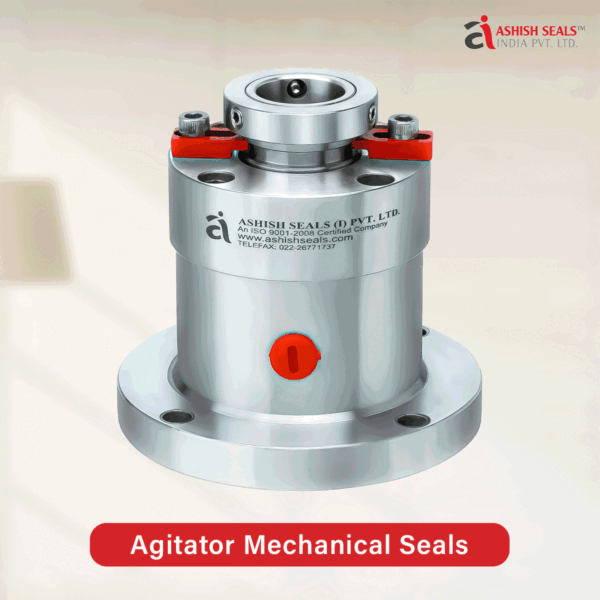
Types of Agitator Mechanical Seals
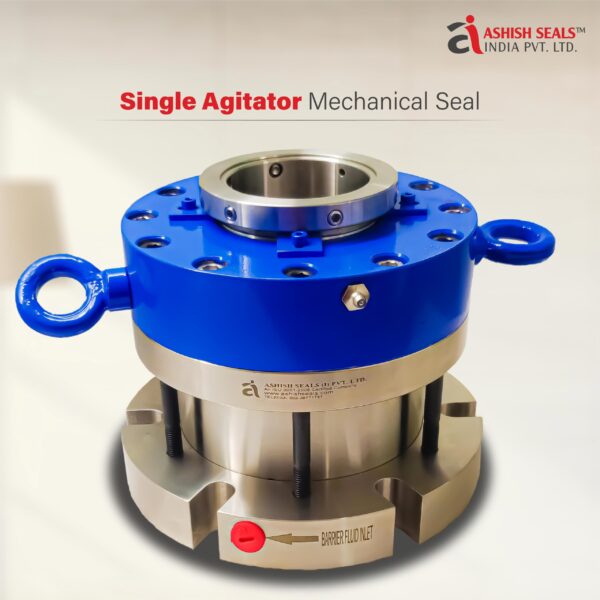
Single Agitator Mechanical Seal
One set of sealing faces — the straightforward, economical choice when the media is non-hazardous and conditions are moderate. We supply single seals for general industrial mixers, low-pressure vessels, clean or compatible fluids, and very often as an upgrade for agitators still running on gland packing.
View More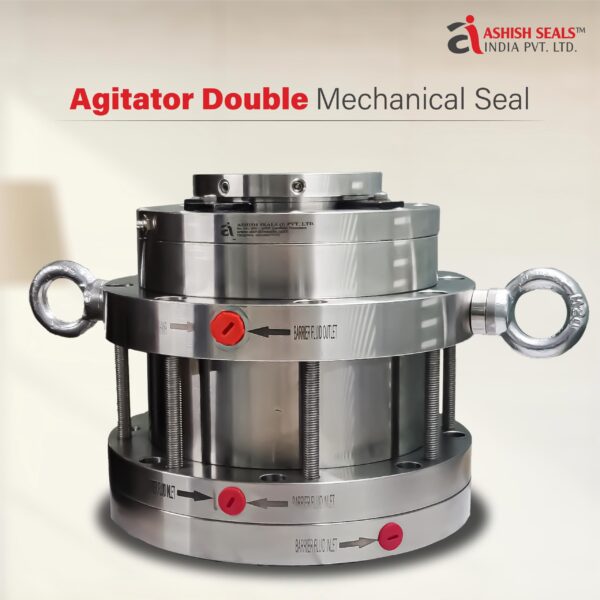
Double Mechanical Seal for Agitators
Two sets of faces with a buffer or barrier fluid between them. The barrier gives you a second stage of containment between the process and the atmosphere — which is exactly what you want when the product is toxic, flammable, volatile, pressurised, under vacuum, or simply too valuable to lose.
View More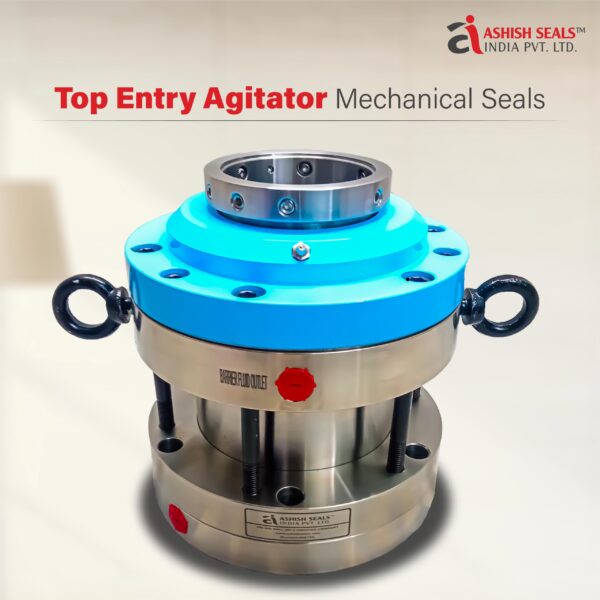
Top-Entry Agitator Seal
Mounted above the vessel, shaft hanging vertically into the product. This is the most common arrangement on reactors, chemical and pharmaceutical vessels, paint mixers, resin plants and adhesive equipment — and also the arrangement where shaft behaviour matters most.
View More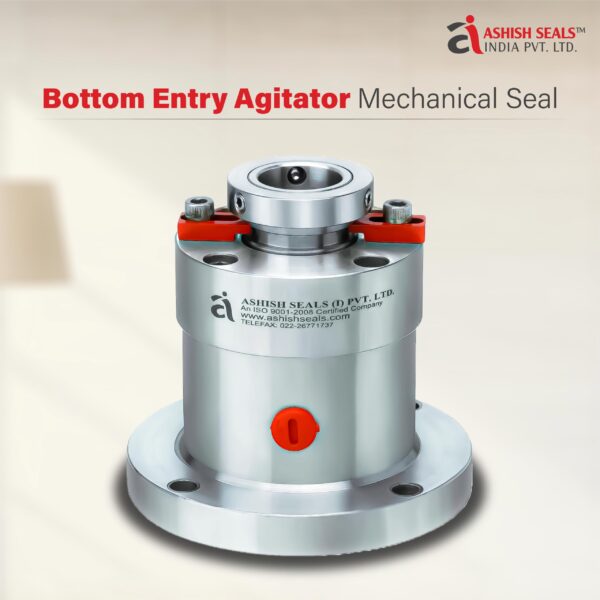
Bottom-Entry Agitator Seal
Installed below the vessel, close to the product zone — which changes the design questions completely. Now we're thinking about product settling on the seal, solids, crystallisation at the faces, and how the seal area gets cleaned. Bottom-entry seals are common on homogenisers, emulsifiers, food-processing vessels and high-viscosity duties.
View MoreWhat We Need to Quote Your Seal
Agitator seals are built around the equipment, not picked off a shelf. The more of this you can send, the faster and more accurate the quotation — but don't hold back an enquiry because a few rows are blank. Photographs of the existing installation fill many of the gaps.
| Parameter | What to Send | Why It Matters |
|---|---|---|
| Equipment type | Agitator, mixer, reactor, kneader, dryer or blender | Sets the duty and expected shaft movement |
| Entry position | Top, bottom, side or inclined | Determines orientation and product exposure |
| Shaft diameter | Actual shaft or sleeve diameter | Sets face, sleeve and internal dimensions |
| Shaft drawing | Steps, threads, keyways, available length | Confirms fit on the existing shaft |
| Vessel flange | OD, PCD, bolt count, pilot, mounting depth | Needed for gland and cartridge design |
| Installation space | Available height, width, clearance | Avoids clashes with the drive or vessel |
| Speed | Normal and maximum RPM | Affects heat generation and face choice |
| Rotation | CW, CCW or reversible | Directional vs bidirectional design |
| Pressure / vacuum | Normal, maximum, fluctuating | Sets seal balance and support needs |
| Temperature | Operating, maximum and cleaning (CIP/SIP) | Drives face, elastomer and metal choice |
| Media | Chemical name, concentration, pH | Material compatibility |
| Product behaviour | Clean, sticky, abrasive, crystallising, polymerising | Changes geometry and flushing |
| Viscosity | At operating temperature | Drag and product movement at the seal |
| Solids | %, particle size, abrasiveness | Face materials and clearances |
| Shaft runout | Measured at the seal location | Excess runout is a leading leak cause |
| Axial movement | Lift, thermal growth, end float | Sets axial capacity |
| Leakage risk | Non-hazardous, toxic, volatile, flammable | Single vs double decision |
| Lubrication | Dry, product, liquid or gas barrier | How the faces are cooled |
| Existing seal | Model, drawing, photos, sample, failure history | Enables a compatible replacement |
| Order details | Quantity, delivery location, required date | Production and dispatch planning |
Typical builds cover pressures up to [XX bar], vacuum down to [full vacuum], and temperatures from [–20 °C to 250 °C], depending on the material combination. Final limits are stated on the approved design.
Choose the Right Agitator Mechanical Seal
Use this table for a first shortlist. The final choice always comes down to your media, pressure or vacuum level, temperature, shaft movement and how strictly leakage has to be controlled.
| Seal Type | Best Suited For | Typical Applications | Lubrication | Entry Position |
|---|---|---|---|---|
| Single agitator seal | General-duty, non-hazardous media | Mixers, blenders, low-pressure vessels | Dry-running or product-lubricated | Top, side or application-specific |
| Double agitator seal | Toxic, volatile or contamination-sensitive media | Chemical reactors, solvent vessels, pharma mixers | Barrier or buffer fluid | Top, bottom or side |
| Cartridge agitator seal | Faster installation and replacement | New equipment and retrofits | Dry, liquid or gas-supported | Multiple configurations |
| Dry-running agitator seal | No liquid lubrication available | Top-entry mixers running above product level | Dry-running face combination | Mainly top entry |
| Liquid-lubricated double seal | Duties needing face cooling | Pressurised reactors, demanding vessels | Liquid barrier or buffer system | Top, bottom or side |
| Gas-lubricated agitator seal | Zero liquid contamination permitted | High-purity pharma and speciality chemical duties | Controlled gas barrier | Application-specific |
Where your specification calls for standard envelopes, we work to [EN 12756 / DIN 24960 dimensions and DIN 28138 agitator seal requirements].
Industries We Serve
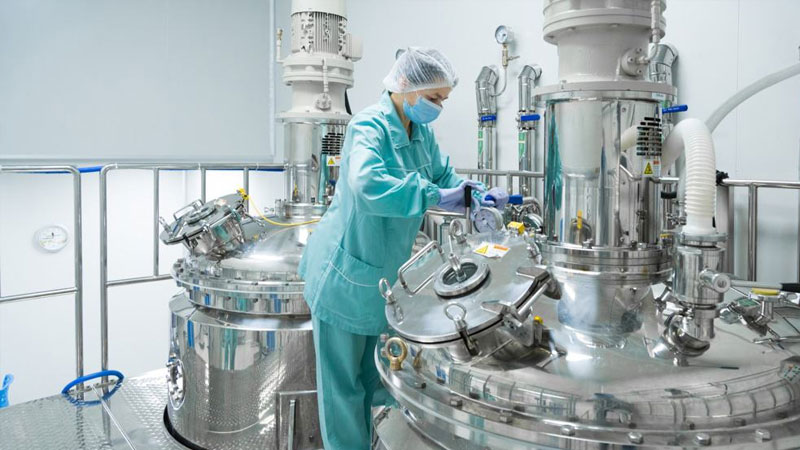
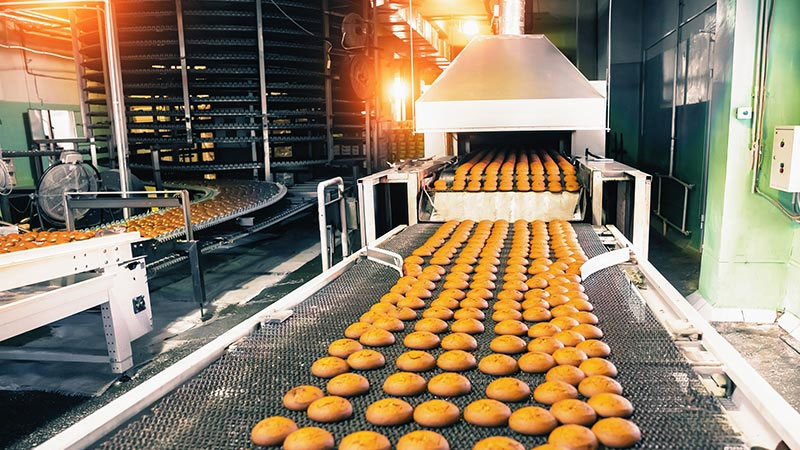
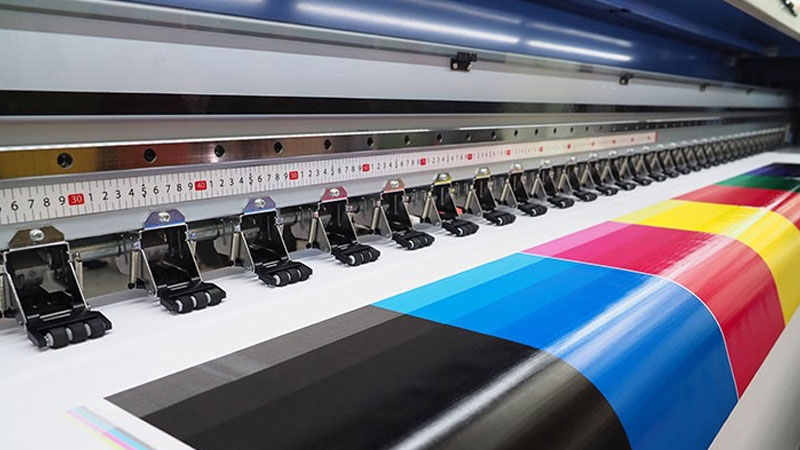
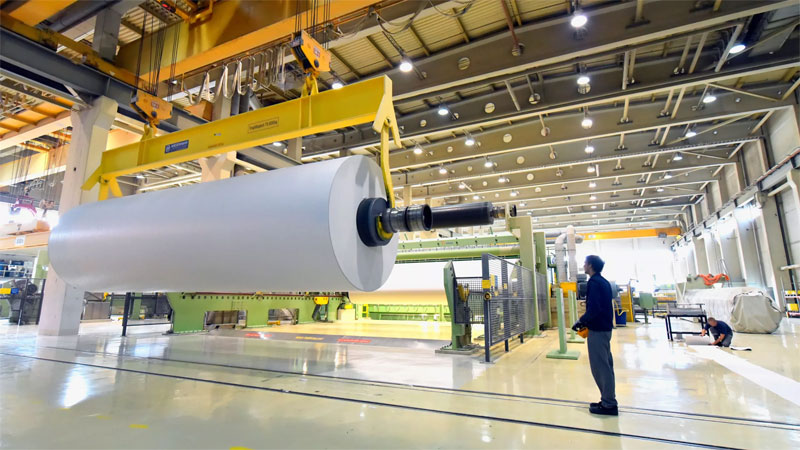
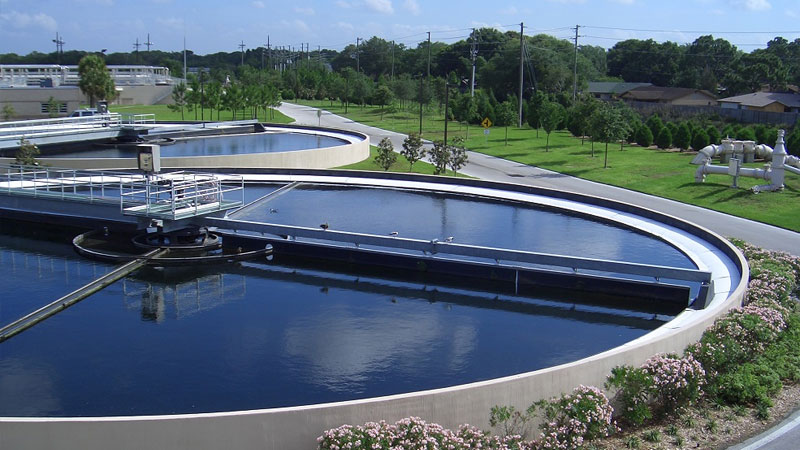
Agitator mechanical seals go wherever a rotating mixing shaft enters a closed, pressurised, vacuum or contamination-sensitive vessel:

Why Buy from Ashish Seals India?
We've manufactured industrial sealing solutions in Mumbai since 2005, with the entire process under one roof:
Application-based seal selection by our own engineering team
Custom design and development, including reverse engineering from a worn sample
CNC and VMC machining, seal-face lapping [checked to light-band flatness]
Component inspection, assembly and testing before every dispatch
Matched thermosyphon and barrier-fluid systems supplied with the seal
[Repair and reconditioning of existing seals]
Frequently Asked Questions
What is an agitator mechanical seal?
It's the seal that controls leakage where a rotating agitator shaft passes through the wall of a mixer, reactor or process vessel. Without it, the product — or the vacuum, or the pressure — escapes along the shaft.
Is an agitator mechanical seal the same as an agitator shaft seal?
Yes. Both names describe the sealing arrangement fitted around the rotating agitator shaft. You'll also hear "mixer shaft seal" and "reactor seal" used for the same thing.
How is an agitator seal different from a pump seal?
An agitator seal usually runs slower but has a harder life: more shaft runout, more radial deflection, more axial movement, and often a long unsupported shaft. It has to be designed around the vessel and shaft, not just the diameter. That's also why a pump mechanical seal can't simply be fitted to an agitator.
Should I use a single or double agitator seal?
Single for non-hazardous media and moderate leakage-control requirements. Double when the product is toxic, volatile, flammable or contamination-sensitive, or when a controlled barrier environment is needed at the faces. When in doubt, describe the media — we'll tell you honestly if a single seal is enough.
When is a double mechanical seal required for an agitator?
Whenever leakage to atmosphere must be kept to an absolute minimum, or the process needs a controlled barrier around the sealing faces — hazardous chemicals, solvents, pharma production, vacuum reactors.
Does a double agitator seal need a thermosyphon pot?
Most liquid-lubricated double seals do — the barrier fluid has to circulate, stay cool and stay monitored. We supply the pot and the seal as a matched pair.
Can an agitator seal operate under vacuum?
Yes, provided the arrangement and barrier pressure are designed for the actual vacuum conditions. Tell us the vacuum level along with the other operating data.
Can an agitator mechanical seal run dry?
Only if it was designed to. A purpose-built dry-running seal is fine; a wet-duty seal run dry can wreck its faces within minutes. This is one of the most common failures we see.
What is a cartridge agitator seal?
A pre-assembled unit with the faces, sleeve and gland already set at the factory. It removes installation-setting errors and makes replacement during maintenance much faster.
Can a mechanical seal replace gland packing on my agitator?
Usually, yes — and it's one of our most common jobs. Send the stuffing-box bore, depth and shaft diameter; in most cases a seal can be adapted to the existing housing without machining the vessel.
Can you manufacture a replacement from an old seal or sample?
Yes. We regularly develop replacements from a worn sample, a dimensional drawing, or even good photographs plus the equipment details and operating conditions.
Which materials are used for agitator seals?
Carbon, silicon carbide and tungsten carbide for the faces; SS 316/316L for metal parts; FKM, EPDM, PTFE or FFKM for the secondary seals. The right combination depends on your media, temperature and solids.
Why does my agitator seal keep leaking?
The usual suspects: excessive runout, misalignment, vibration, the wrong materials for the media, dry running, barrier-pressure problems, product deposits at the faces, or worn bearings. Send photos of the failed seal and the operating data — we'll identify the likely cause before quoting a replacement.
How long does a custom agitator seal take to manufacture?
Typically [X–Y weeks] depending on materials and complexity. Repeat orders against an approved drawing ship faster. Share your required date with the enquiry and we'll confirm.
Do you supply agitator seals outside Mumbai?
Yes — we supply across India [and export to the Middle East, Africa and Southeast Asia].
What details do you need for a quotation?
Shaft diameter, flange dimensions, mounting position, speed, pressure, temperature, media, viscosity, solids content, existing seal details and quantity. See the table above — and if some of it is missing, send photos and we'll work from there.
Request a Quote for an Agitator Mechanical Seal
New agitator, existing mixer, or a replacement problem that keeps coming back — send us the equipment drawing, existing seal details and process conditions. Our engineers will review the application and recommend the seal configuration, materials and support arrangement, with a quotation to follow.